How High-Performers Actually Rest
Why Rest Matters
Recovery is a critical part of mental and physical performance. Elite athletes like LeBron James structure their lifestyle around sleep, nutrition, and recovery. Experts like Andrew Huberman emphasize deliberate rest practices such as NSDR and pre-performance naps to improve cognitive focus, emotional regulation, and learning. Many elite endurance athletes schedule multiple rest or nap sessions per day, combined with stretching or mobility work, to maximize performance and prevent burnout. Rest enhances mental clarity, physical recovery, and baseline dopamine—supporting motivation, resilience, and long-term sustainability.
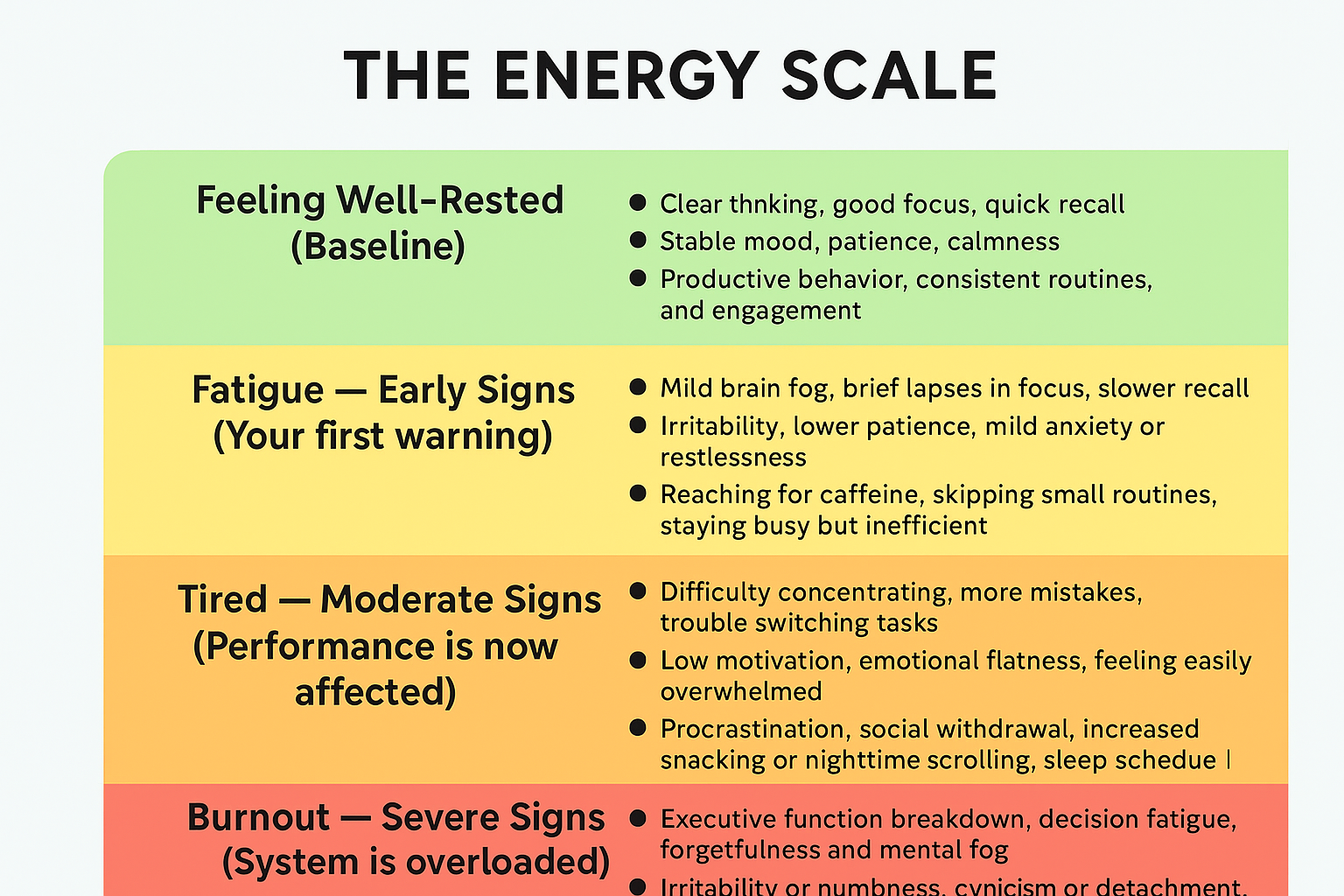
THE ENERGY SCALE
Understanding your energy isn’t just about counting hours of sleep—it’s about recognizing the subtle shifts in your body, mind, and behavior that signal where you are on your personal energy scale. From feeling fully rested, to the early warning signs of fatigue, through moderate tiredness that begins to impact performance, and finally to severe burnout when your system is overloaded, each stage comes with distinct cognitive, emotional, and behavioral cues. By tuning into these markers, you can proactively adjust your rest, routines, and recovery strategies before your energy crashes, helping you stay productive, balanced, and resilient.
Feeling Well-Rested (Baseline)
Clear thinking, good focus, and quick recall
Stable mood, patience, and calmness
Productive behavior, consistent routines, and engagement
Fatigue — Early Signs (Your first warning)
Mild brain fog, brief lapses in focus, slower recall
Irritability, lower patience, mild anxiety or restlessness
Reaching for caffeine, skipping small routines, staying busy but inefficient
Tired — Moderate Signs (Performance is now affected)
Difficulty concentrating, more mistakes, trouble switching tasks
Low motivation, emotional flatness, feeling easily overwhelmed
Procrastination, social withdrawal, increased snacking or nighttime scrolling, sleep schedule drifting
Burnout — Severe Signs (System is overloaded)
Executive function breakdown, decision fatigue, forgetfulness and mental fog
Irritability or numbness, cynicism or detachment, loss of drive or pleasure
Avoidance, shutdown, or isolation, reliance on caffeine/alcohol to cope, inconsistent sleep, drop in work quality or missing commitments
SLEEP
Sleep and rest are not a luxury for high-performers—it’s a cornerstone of sustained focus, productivity, and emotional regulation. Optimizing sleep goes beyond hours in bed; it’s about creating consistent routines, a supportive environment, and understanding the subtle factors that influence restorative rest.
Key Principles
Consistency over perfection matters most: a stable sleep/wake schedule strengthens circadian rhythm and improves recovery. Prioritize quality over quantity, because deep sleep and REM stages drive emotional regulation, memory consolidation, and physical repair. Nighttime sleep is irreplaceable; naps and NSDR sessions support recovery but cannot fully replicate the hormonal and neurological benefits of nighttime rest. Reduce evening stimulation by limiting screens, heavy meals, bright lights, and intense workouts before bed. Finally, supporting airway health is crucial—mild sleep apnea is common, often overlooked, and can significantly degrade sleep quality even in high-functioning adults.
Why Cooling Matters
Falling asleep requires a drop in core body temperature of 2–3°F (≈1°C). Warm environments can hinder this natural decline, leading to trouble falling asleep, fragmented rest, lower deep sleep, elevated nighttime heart rate, reduced HRV, and morning grogginess. Aim for a bedroom temperature of 60–67°F (15.5–19.5°C). Cooling strategies include keeping the room cool, using a fan or cracked window, taking a warm shower 60–90 minutes before bed to trigger the post-shower temperature drop, selecting breathable bedding, avoiding heavy pajamas, and moving intense workouts earlier in the day.
The Often-Missed Sleep Disruptor: Mild Sleep Apnea
Mild obstructive sleep apnea (OSA) affects roughly 1 in 6 adults, often without obvious symptoms. Even brief airway interruptions fragment sleep, reduce recovery hormones, increase next-day anxiety or irritability, impair focus and memory, elevate resting heart rate, lower HRV, and cause fatigue despite sufficient sleep hours. Common signs include unrefreshing sleep, snoring, morning headaches, frequent awakenings, gasping or choking at night, teeth grinding, daytime sleepiness, and elevated nighttime heart rate. High-risk individuals include those with stress, recent weight gain, larger neck circumference, back-sleepers, and those with chronic insomnia. Strategies to improve airway health include side-sleeping, limiting alcohol before bed, using nasal strips, reviewing sleep data, and consulting a physician for a home sleep test if symptoms persist.
Establishing a Simple Sleep Schedule
Anchor your day with a consistent wake time. Cool your environment to signal readiness for sleep, and follow a 30–60 minute wind-down routine that may include dimming lights, light stretching, reading, or NSDR. Set a bedtime 7–9 hours before waking and reduce evening stimulation. Morning sunlight within 30 minutes of waking reinforces your circadian rhythm.
Non-Sleep Deep Rest (NSDR)
NSDR is a powerful recovery tool that engages the parasympathetic nervous system, reduces sympathetic activation, and improves HRV. Studies show it enhances connectivity in brain networks related to attention, emotional regulation, and memory. Optimal sessions last 10–40 minutes; longer sessions may induce grogginess. Key elements include a quiet space, lying on your back with eyes closed, focusing on slow exhalations, and aiming to reduce cognitive load. Benefits include increased baseline dopamine, stress reduction, improved physical recovery, enhanced memory, and emotional regulation. NSDR complements, but does not replace, nighttime sleep.
Practical Steps & Homework
Complete one NSDR/Yoga Nidra session today (10–40 min)
Try NSDR during lunch or short work breaks
Set a consistent wake-up time every day for a week
Use a cooling strategy before bed tonight
Track changes in focus, energy, and sleep quality over 3–5 days
NSDR Resources
YouTube:
10–15 min: https://www.youtube.com/watch?v=6p_yaNFSYao
20–30 min: https://www.youtube.com/watch?v=1vx8iUvfyCY
Spotify: Search “Yoga Nidra” or “NSDR”
